Constraints-Led Training in Hurdles: Designing Rhythm, Speed and Adaptability

Mar 02, 2026

Designing rhythm, speed and adaptability through task manipulation

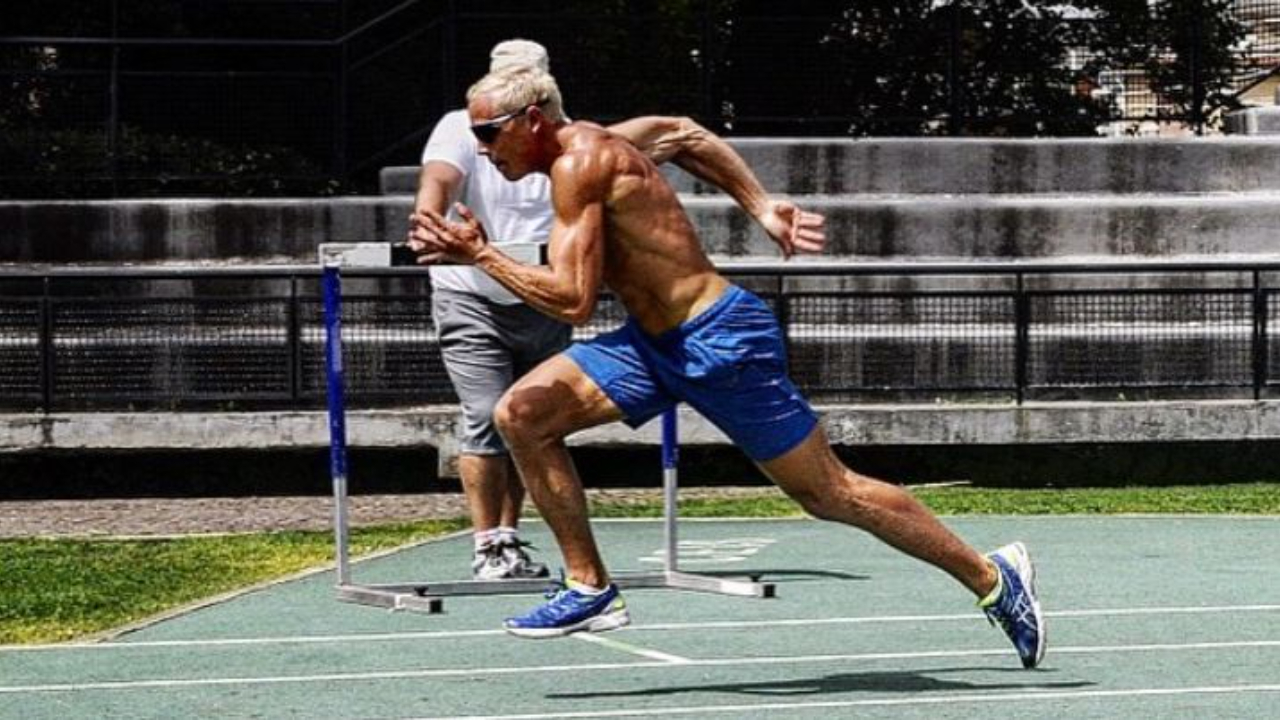
Hurdles present a unique coaching challenge.

The heights are fixed.
The distances are fixed.
The rhythm is unforgiving.

Unlike open-skill sports, athletes cannot modify the environment during competition. And yet, performance still depends on problem-solving under speed.

This is where Constraints-Led Training becomes so interesting.

Instead of prescribing exact technical positions, this approach manipulates the training environment so that effective solutions emerge naturally.


What Is Constraints-Led Training?

Constraints-Led Training is rooted in ecological dynamics and non-linear pedagogy.

The core idea is simple:

Athletes do not learn in isolation.
They adapt to constraints.

Constraints generally fall into three categories:

  • Performer constraints – strength, height, mobility, perception, motivation

  • Environmental constraints – wind, surface, noise, temperature

  • Task constraints – spacing, hurd

    ...
Continue Reading...

Why Acceleration Is the Real Performance Driver in Sprinting

Feb 10, 2026

Rethinking sprint performance through mechanics, timing and constraints

Sprint acceleration accounts for more than half of 100m sprint race performance.
And yet, in everyday coaching practice, it is still often treated as a preparatory phase — something to “get through” before real sprinting begins.

Strength improves. Gym numbers go up. Exercises look solid.
But when athletes return to the track, the first steps often look frustratingly similar. Acceleration remains slow, ground contact times stay long, and performance stagnates.

This disconnect is not a matter of motivation or effort.
It is a model problem.

Acceleration is not separate from max velocity

A common mistake in sprint training is treating acceleration, maximal velocity and technique as separate qualities. In reality, sprinting is a continuous mechanical process.

Acceleration is simply the first expression of the same system that will later determine upright sprint speed. What happens in the first few steps directly s...

Continue Reading...

When Strength Improves but Speed Doesn’t

Jan 30, 2026
 

Rethinking the “Glute Problem” in Sprint Acceleration

Have you ever had this happen?

You work really well with an athlete in the gym.
Strength improves, loads go up, exercises look solid.
Numbers are better, the athlete feels stronger.

Then you go back to the track…
and in the first few steps, almost nothing changes.

Acceleration is still slow, ground contact times remain high, and sooner or later some hamstring tightness starts to appear.
And the obvious thought comes up:

How is this possible? They are clearly stronger.

This scenario is far more common than we like to admit.

And it’s usually at this point that a very natural reflex kicks in:
Maybe they’re still not strong enough.

So we add more load.
More glute work.
More strength.

But what if this is the wrong question?

Is it really a strength problem?

In early acceleration (especially in the first 5–10 meters), performance is rarely limited by force production alone.
Much more often, what actually limits the athlete is:

...
Continue Reading...

Three Data Points That Truly Shape High Jump Performance

Jan 16, 2026

Three Data Points That Truly Shape High Jump Performance

In the high jump, performance is not decided not only at take-off.

It is built step by step, through rhythm, velocity management, and control of the curve. While the final action over the bar is the most visible part of the jump, what happens in the last meters of the run-up often determines whether the jump will be successful or not.

In this article, we explore three key data points that allow coaches to better understand technical quality in the high jump and to make more informed coaching decisions. These parameters are not isolated numbers, but connected elements that describe how the athlete arrives at take-off.


1. Flight Time in the Last Three Steps

One of the most informative parameters in the high jump approach is the flight time of the final three steps.

By analysing flight time, coaches can gain valuable insight into:

  • the rhythm of the approach

  • how the athlete prepares for take-off

  • the interaction...

Continue Reading...

Speed Lab Webinar Series

Dec 29, 2025

Speed Lab Webinar Series

A hands-on learning experience for coaches and athletes focused on performance


Speed Festival has always been about more than a single annual event.

It’s a meeting point for coaches, athletes, and practitioners who believe that performance is built through knowledge, experience, and continuous learning.

With this vision in mind, we introduce the Speed Lab Webinar Series:
a curated program of four live webinars designed to bring elite-level expertise directly to coaches and athletes, wherever they are.


A new way to learn, throughout the season

The Speed Lab Webinar Series is built around a simple idea:
high-level education should not be limited to one weekend per year.

From 22 January to 5 March, every two weeks at 12:30 PM CET, four international experts will deliver focused, practical sessions combining theory, real-world examples, and applied coaching insights.

Each webinar includes:

  • 45 minutes of presentation

  • 15 minutes of live Q&A

  • ...
Continue Reading...

Carbon-Plated Running Shoes: Performance, Health, and Practical Tips

Sep 24, 2025

Written by Alessandro Bacci - TrackSpikes

Carbon-Plated Running Shoes: Benefits, Risks, and Practical Tips

The world of athletics and running has dramatically changed over the past five years with the explosion of carbon-plated running shoes, or more precisely, carbon combined with supercritical foams.
This innovation has not only led to an average performance boost—especially in road racing—but has also reached a wide range of recreational runners and consumers who often do not need such technology and, worse, may even risk injury if using it without caution.


From the 1990s to Today: The Origins of Carbon Technology

The idea of embedding carbon plates in running shoes is not new. As far back as the mid-1990s, some elite athletes wore prototypes designed to improve performance.
At that time, however, this technology was reserved for top-level professionals and had little to do with the everyday runner. As a result, research focused exclusively on performance, overlooking aspects of...

Continue Reading...

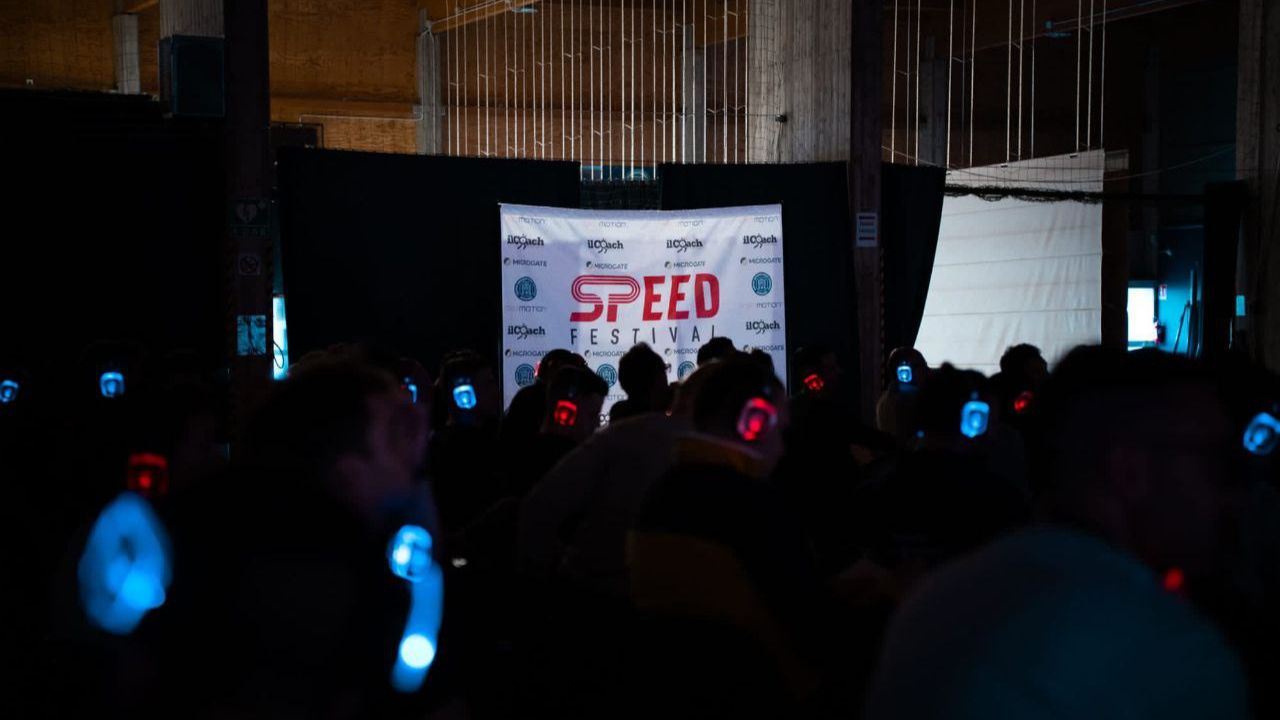
Speed Festival 2025: Last week to save on your ticket

Aug 25, 2025

Only one week left to secure your discounted ticket

The countdown has started: in less than two months the Speed Festival 2025 will return on October 18–19 in Bergamo, Italy.
Two days fully dedicated to sprint, hurdles, jumps and strength training, with coaches, athletes and researchers from all over Europe.

⚡ But this is your last chance to get your ticket at the discounted Early Bird rate.
From September 1st, ticket prices will increase.

What to expect at Speed Festival 2025

The third edition of the Speed Festival will combine science, practice and technology:

  • International speakers like HĂĄkan Andersson, Dr. Jo Brown, Pedro JimĂ©nez-Reyes, Elena Bergamini, Andrea Ceccarelli, Andrea Uberti & Daniel Buttari.

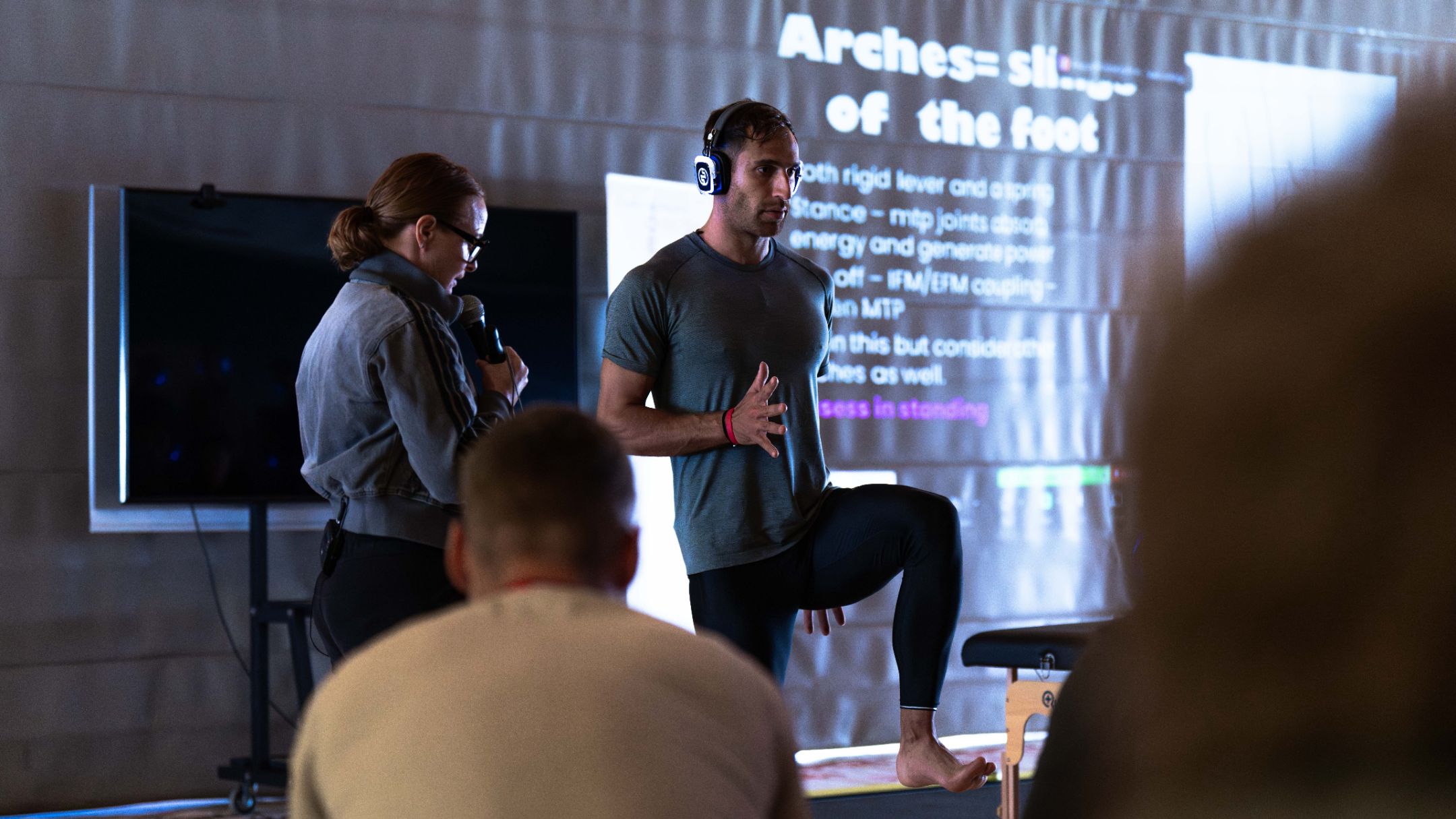
  • Hands-on practice sessions on track and in the gym.

  • Cutting-edge technology demos with 1080 Motion, Microgate and SpaceWheel.

  • Networking with coaches and athletes from across Europe.

In 2024, more than 100 participants from 12 countries joined the Festiv...

Continue Reading...

New Speakers, Stronger Partnerships, and Limited-Time Ticket Prices

Aug 21, 2025

The countdown to Speed Festival 2025 is officially on!
On October 18–19, 2025, the University of Bergamo – Dalmine will host one of Europe’s most innovative events dedicated to sprint training, hurdles, biomechanics, and sports performance coaching.

📌 In recent weeks we already announced the participation of:

  • HĂĄkan Andersson (legendary sprint coach from Sweden)

  • Dr. Jo Brown (expert in strength and conditioning)

  • Andrea Uberti & Daniel Buttari (Italian coaches specialized in sprint and hurdles)

Now it’s time to reveal even more exciting updates: new keynote speakers, returning partners, ticket deadlines, and scholarship opportunities.

Andrea Ceccarelli: From Castelporziano to the World Stage 🌍

We are proud to welcome Andrea Ceccarelli, Technical Director of the Fiamme Gialle athletics team.

At the Castelporziano training center, Ceccarelli has helped create one of the best environments in the world for high-performance athletes. Names like Filippo Tortu, Gianmarco...

Continue Reading...

Data Meets Hurdles: Andrea Uberti & Daniel Buttari at Speed Festival 2025

Aug 13, 2025

From data to track performance.

We’re excited to welcome Andrea Uberti and Daniel Buttari — two key figures in the Italian technical sector — to Speed Festival 2025.

With years of combined experience coaching at the highest levels, both have been instrumental in developing Italy’s national approach to sprint hurdles.

Their work bridges research, technology, and on-track application, ensuring that every data point collected translates into measurable performance gains.

Exclusive Lecture + On-Track Session: Data Analysis of Hurdling Competitions

At this year’s Speed Festival, Uberti and Buttari will present:

“Data Analysis of Hurdling Competitions: The Experience of the Italian Technical Sector”

This unique double-format session will combine:

  • A theoretical lecture revealing how competition analysis — from split times to hurdle clearance efficiency — shapes smarter, more effective training strategies.

  • A practical track session with drills and progressions inspired direc...

Continue Reading...

HĂĄkan Andersson Returns to Speed Festival 2025

Aug 04, 2025

Strength that transfers to speed.

We're proud to welcome back Håkan Andersson, one of Europe’s most influential sprint coaches, to Speed Festival 2025.

With over four decades of experience coaching elite and Olympic sprinters — including athletes from Sweden’s national team — Håkan has earned global recognition for his evidence-based approach to speed development and strength training.

Rather than chasing trends, Andersson has consistently focused on what truly works in high-performance environments: force application, movement quality, and progressive adaptation.

New Lecture: Strength Training for Sprinting

This year, Håkan will present a brand-new lecture focused on one of the most essential — and often misunderstood — elements of sprint performance:

“Strength for Speed – What Really Transfers”

He’ll break down the principles that underpin effective strength development for sprinters and share insights into:

  • How to identify the types of strength that matter most

  • ...
Continue Reading...
1 2
Close

Vuoi restare informato?

Vuoi essere informato sulla nuova edizione dello SprintFestival? Lascia i tuoi dati e le tue preferenze nel form sottostante.

50% Completato

"Inserendo ed inviandoci il tuo nome e la tua email dichiari di aver letto e di accettare le nostre condizioni sulla privacy policy e acconsenti al trattamento dei miei dati personali ai sensi dell’art. 13 D. Lgs. 30 giugno 2003, n. 196"