Seven Medals from Birmingham Are Coming to Speed Festival — And That’s Only Part of the Story
Beyond the Medals: Why We Chose the Speed Festival 2026 Speakers
When we build the educational programme for Speed Festival, we try not to be guided by the latest results.
We do not invite a coach because one of their athletes has just won a medal, or choose a topic because it happens to be trending. We prefer substance over immediacy.
Sometimes, however, the headlines catch up with the substance.
The recently concluded European Athletics Championships in Birmingham provided a perfect example.
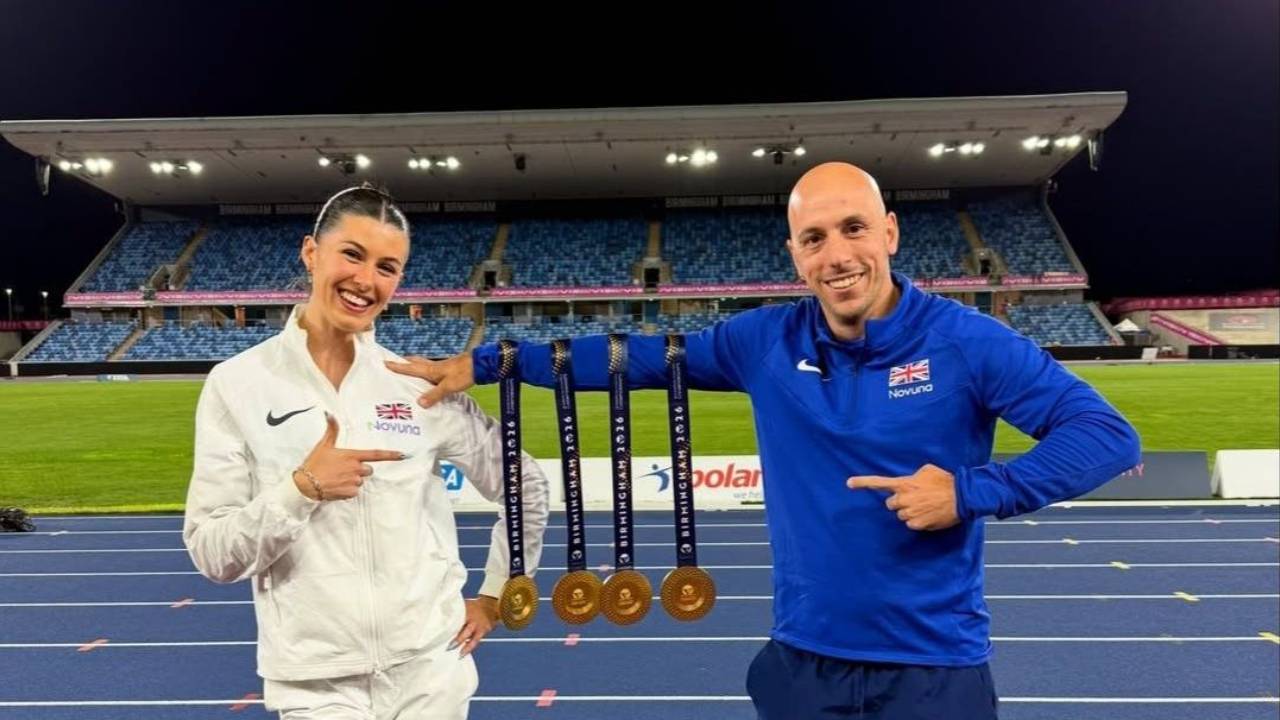
Athletes coached or supported by two of the professionals joining us at Speed Festival 2026 collected seven medals: five golds, one silver and one bronze.
Marco Airale enjoyed an extraordinary championship. Amy Hunt won four European titles — 100m, 200m, women's 4×100m and mixed 4×100m — while Timothé Mumenthaler added bronze in the men's 200m and Imani-Lara Lansiquot won gold with Great Britain's women's 4×100m team.
Amit Batra, meanwhile, works closely with Natalia Bukowiecka, who claimed silver in the women's 400m.
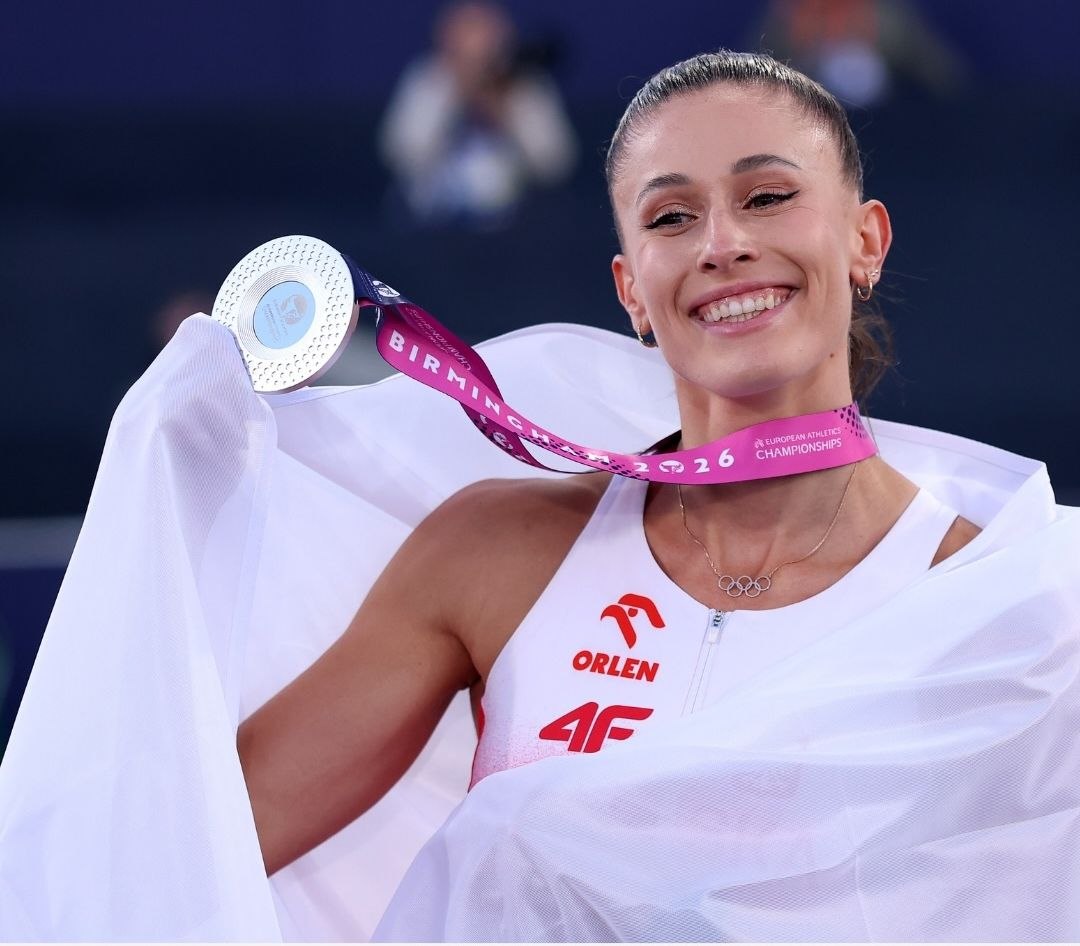
Birmingham also brought success to Ultra, our organisational partner: Alessandra Bonora won bronze with the Italian women's 4×400m relay, while Luca Sito became European champion with the men's 4×400m team.
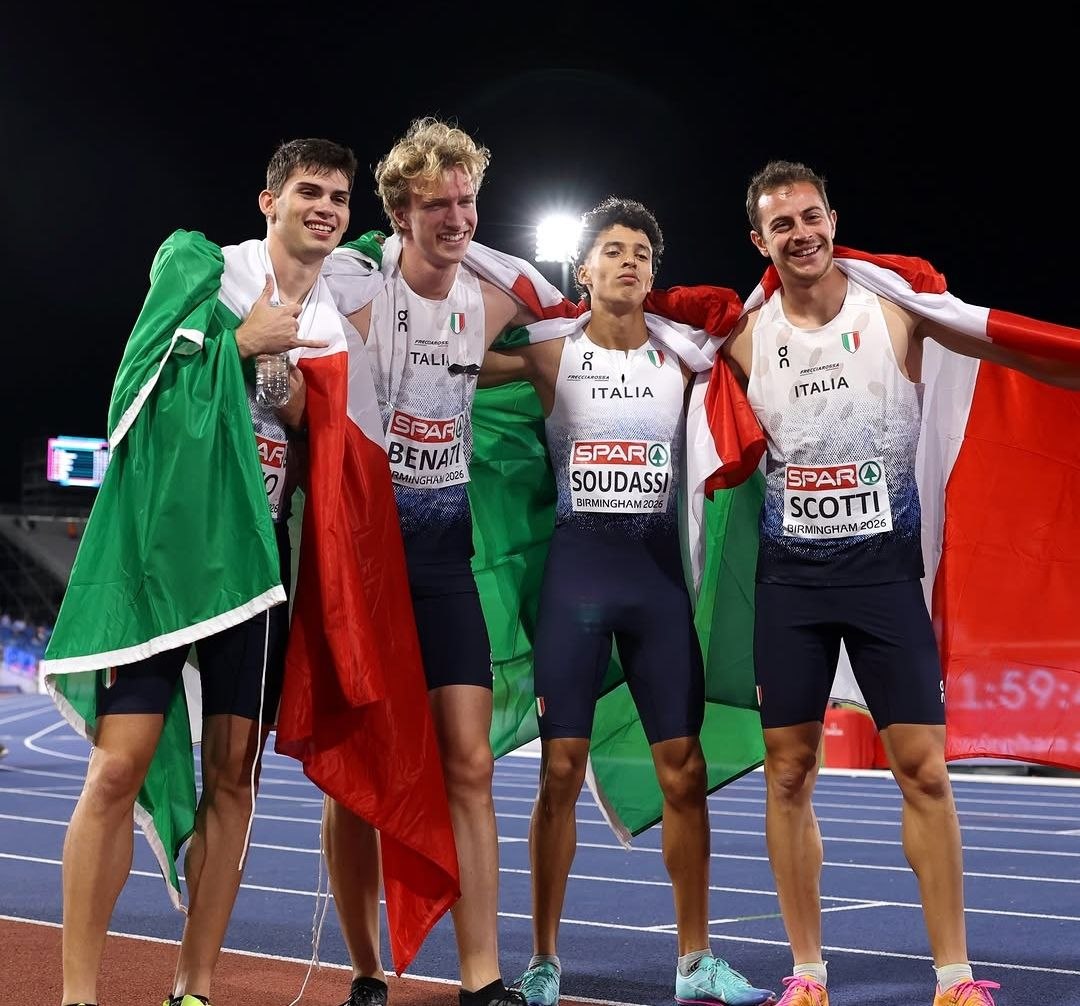
Those results deserve to be celebrated. But they are not why Marco or Amit are coming to Speed Festival.
What interests us more is what happens before the medal: the training, decisions, assessment, scientific support and small adjustments that eventually become performance.
That is the real starting point of the Speed Festival 2026 programme.
MOVE BETTER. MOVE FASTER.
The theme of this year's event is simple: MOVE BETTER. MOVE FASTER.
Behind those four words is a complex question: what actually allows an athlete to move faster? The answer is rarely one thing.
That is why we built the programme around different questions: how should we assess an athlete? How can movement influence performance? How should we develop force and plyometric qualities? How can science improve decisions? How do athletes learn adaptability? What changes when speed becomes multidirectional? What can coaches learn from the athlete's perspective?
We did not build the line-up around names.
We built it around questions.
Dr Jo Brown — Assessing what really matters
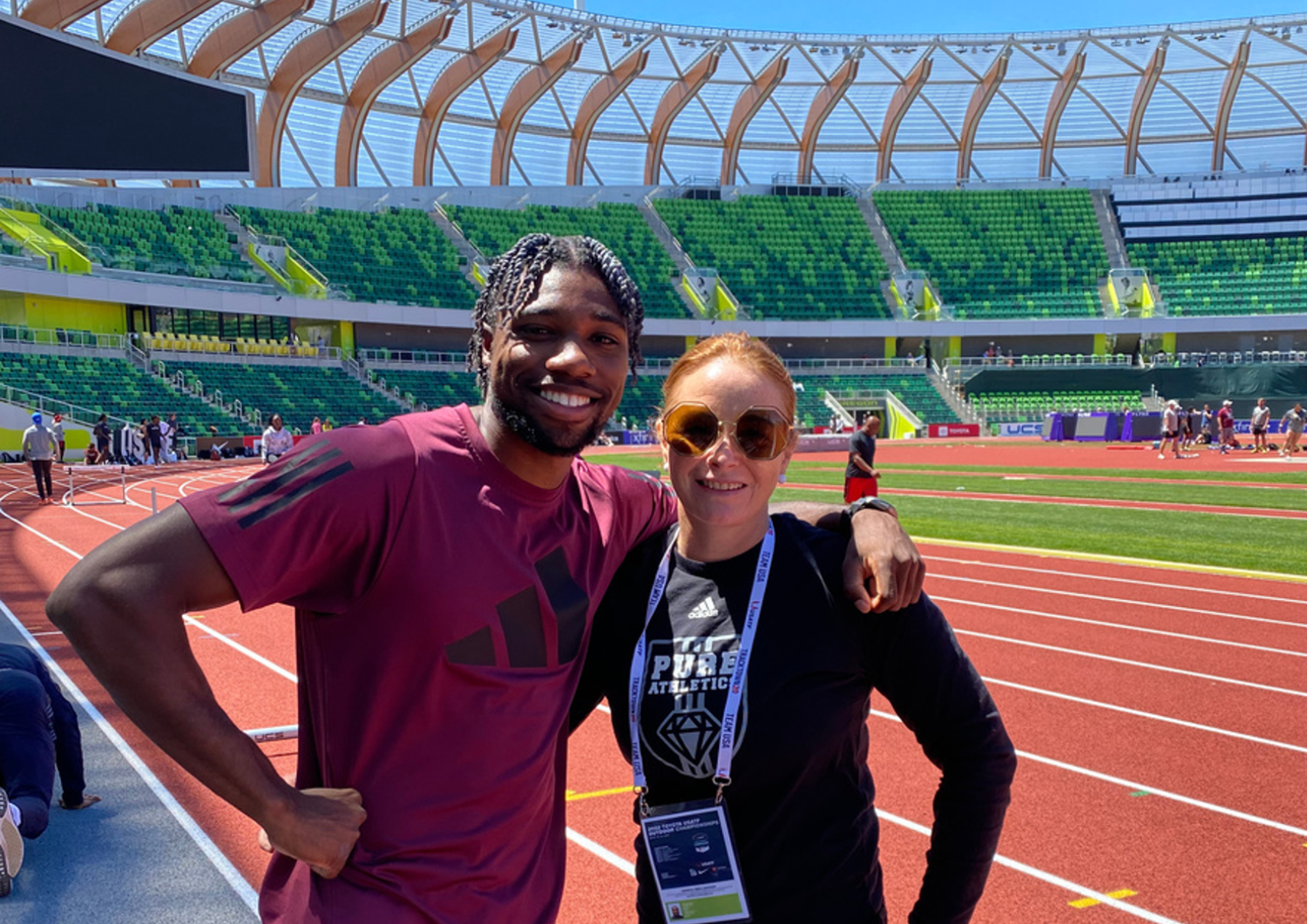
Dr Jo Brown works at the intersection of physiotherapy, biomechanics, movement assessment and elite performance. She has worked closely with athletes including Noah Lyles and Olympic 100m hurdles medallist Megan Tapper.
At that level, physiotherapy is not only about treating injuries. It is also about understanding whether an athlete can access the positions required to produce and transfer force at speed.
On Saturday, her three-hour Assessment Track & Field workshop will focus on observing athletes and turning assessment into practical training decisions.
On Sunday, The Speed Equation will explore pressure, position, processing and the nervous system.
We chose Jo because assessment should change what the coach does next.
Stefano Serranò — From posture to performance
Posture is often reduced to static ideas of “good” and “bad” positions.
But athletes do not perform while standing still.
Stefano Serranò works within the high-performance structure of Italian athletics, with experience in postural and neuromuscular assessment, functional evaluation and scientific support for national-team athletes.
His work has brought him into contact with many athletes competing at the highest international level, including athletes we have just watched in Birmingham.
His presentation, Postural Conditioning: From Posture to Performance, is about how posture and movement organisation can influence force production and transfer — and how those observations can inform training.
That transition, from assessment to performance, is exactly why we wanted him in the programme.
Marco Airale — Resisted sprinting inside a real programme
Resisted sprinting is now everywhere: sleds, heavy loads, light loads, motorised systems and velocity decrement.
But the most important question remains simple:
Why are we using it?
Marco Airale works daily with elite international sprinters. Birmingham has provided a very visible example of that work, but the medals are not why we invited him.
We invited Marco because resisted sprinting has to fit inside a complete system alongside acceleration, maximal velocity, technical work, strength training and competition.
His Saturday workshop will focus on that integration: selecting loads, defining the intended adaptation and deciding where resisted sprinting belongs within the week and season.
The medals make the topic timely.
The process behind them is what interests us.
Gennaro Boccia — Rethinking strength and plyometrics
When we decided to include plyometrics, we did not want another collection of jump exercises.
Plyometric training is a stimulus, and coaches need to understand what that stimulus is trying to change.
Gennaro Boccia works in the neuromuscular area within the scientific structure of the Italian Athletics Federation and has been involved in coach education around strength and plyometric training.
This approach has helped reshape the discussion in Italian athletics: less emphasis on isolated exercises, more attention to rate of force development, stretch-shortening cycle behaviour, contact times, reactive strength and individual response.
The question is not:
“What is the best plyometric exercise?”
It is:
“What adaptation does this athlete need, and what stimulus is most likely to produce it?”
That is why Gennaro is at Speed Festival.
Amit Batra — Science that supports decisions
Modern performance environments can measure almost everything: force, velocity, power, recovery, jump performance, sprint splits and training load.
The challenge is deciding which information deserves to influence training.
Amit Batra works in applied sport science and physiology, using testing and monitoring to support elite athletes and coaches. His work with Natalia Bukowiecka makes this particularly relevant after Birmingham.
But the interesting part is what happens after the data is collected.
Does the information change training? Confirm what the coach is seeing? Identify fatigue? Help individualise the programme? Or does it simply become another graph?
His presentation, How Science Supports Elite Performance, will explore exactly this relationship.
We are not interested in “science versus coaching”.
We are interested in science inside coaching.
Laura Turner-Alleyne — Finding rhythm, creating chaos
Hurdling looks predictable: fixed distances, fixed barriers, a straight lane.
In reality, speed, take-off distances and rhythm are constantly changing, and athletes eventually need to solve those problems themselves.
Laura Turner-Alleyne brings both an elite athlete's perspective and a coach's perspective to this question.
Her presentation title says it all:
Finding Rhythm, Creating Chaos.
Developing athletes requires structure, rhythm and repetition, but also variability and adaptability.
When should a coach provide the solution, and when should the athlete be placed in an environment where they have to find it?
That question goes beyond hurdling.
It is a fundamental question of coaching.
Johan Lahti — When speed stops being linear
Athletics gives us one of the purest models of speed: start here, run there, as fast as possible.
Most sports are different.
Athletes accelerate, decelerate, change direction, react and produce force from less predictable positions.
Johan Lahti works in this space, across sprint mechanics, acceleration, deceleration and multidirectional speed.
We invited Johan because we wanted to take the principles of sprinting beyond the track.
What transfers from linear sprinting? What changes when an athlete has to brake? How does force application change during a change of direction? How do we train speed when the next movement cannot always be predicted?
His contribution broadens the central question of the festival:
What does speed actually mean in different sporting environments?
Anna Ryzhykova — Performance from the athlete's side
Most coaching conferences are dominated by coaches and researchers.
But someone else experiences every training programme we write:
the athlete.
Anna Ryzhykova has spent years competing at the highest international level in the 400m hurdles, including Olympic Games, World Championships and European Championships.
Now she is increasingly looking at that experience through the eyes of a coach.
What does an elite athlete understand about training that a coach may not immediately see?
Which decisions felt important from the inside?
Which lessons only become clear after years of experience?
We invited Anna because performance is not only about the programme that is written.
It is also about how that programme is experienced by the athlete.
Two days, two ways of learning
The structure of Speed Festival 2026 reflects the same philosophy.
Saturday 10 October will be entirely practical, with two three-hour workshops:
Dr Jo Brown — Assessment Track & Field
Marco Airale — Resisted Sprinting
The smaller format gives participants more time to observe, ask questions and understand why.
Sunday 11 October returns to the traditional conference format: seven speakers bringing together coaching, research, sport science and elite-performance experience, with simultaneous English-to-Italian translation.
Different backgrounds.
Different areas of expertise.
One central question:
How can we create better conditions for athletes to express speed?
Beyond Birmingham
The European Championships gave us an excellent reason to celebrate.
The medals matter, and we are proud that people joining us in Dalmine are directly involved in some of the highest-level performances in European athletics.
But by October, Birmingham will already belong to the past.
What will still matter is the knowledge behind those performances: the decisions that helped create them, the relationship between research and practice, and the ideas that can be adapted to different environments.
That is what we want to discuss at Speed Festival.
Because medals make the headlines.
The work behind them is what interests us.
SPEED FESTIVAL 2026
MOVE BETTER. MOVE FASTER.
10–11 October 2026
CUS Bergamo — Dalmine, Italy
Saturday: two three-hour practical workshops
Sunday: seven speakers and a full day of conference presentations