
Three Data Points That Truly Shape High Jump Performance

Three Data Points That Truly Shape High Jump Performance
In the high jump, performance is not decided not only at take-off.
It is built step by step, through rhythm, velocity management, and control of the curve. While the final action over the bar is the most visible part of the jump, what happens in the last meters of the run-up often determines whether the jump will be successful or not.
In this article, we explore three key data points that allow coaches to better understand technical quality in the high jump and to make more informed coaching decisions. These parameters are not isolated numbers, but connected elements that describe how the athlete arrives at take-off.
1. Flight Time in the Last Three Steps
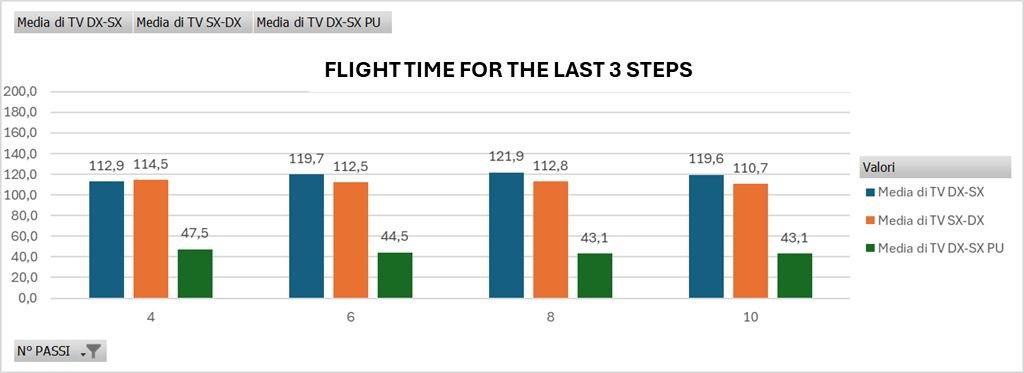
One of the most informative parameters in the high jump approach is the flight time of the final three steps.
By analysing flight time, coaches can gain valuable insight into:
-
the rhythm of the approach
-
how the athlete prepares for take-off
-
the interaction between speed, posture, and coordination
Small variations in flight time often reveal underlying technical issues such as loss of rhythm, excessive braking, or poor organisation of the last steps. These changes have a direct impact on take-off efficiency, force orientation, and consistency at the bar.
From a practical standpoint, flight time is often the earliest indicator that something is not working as intended. Before a jump fails, rhythm usually breaks first.
2. Velocity Progression: More Than Just Maximum Speed
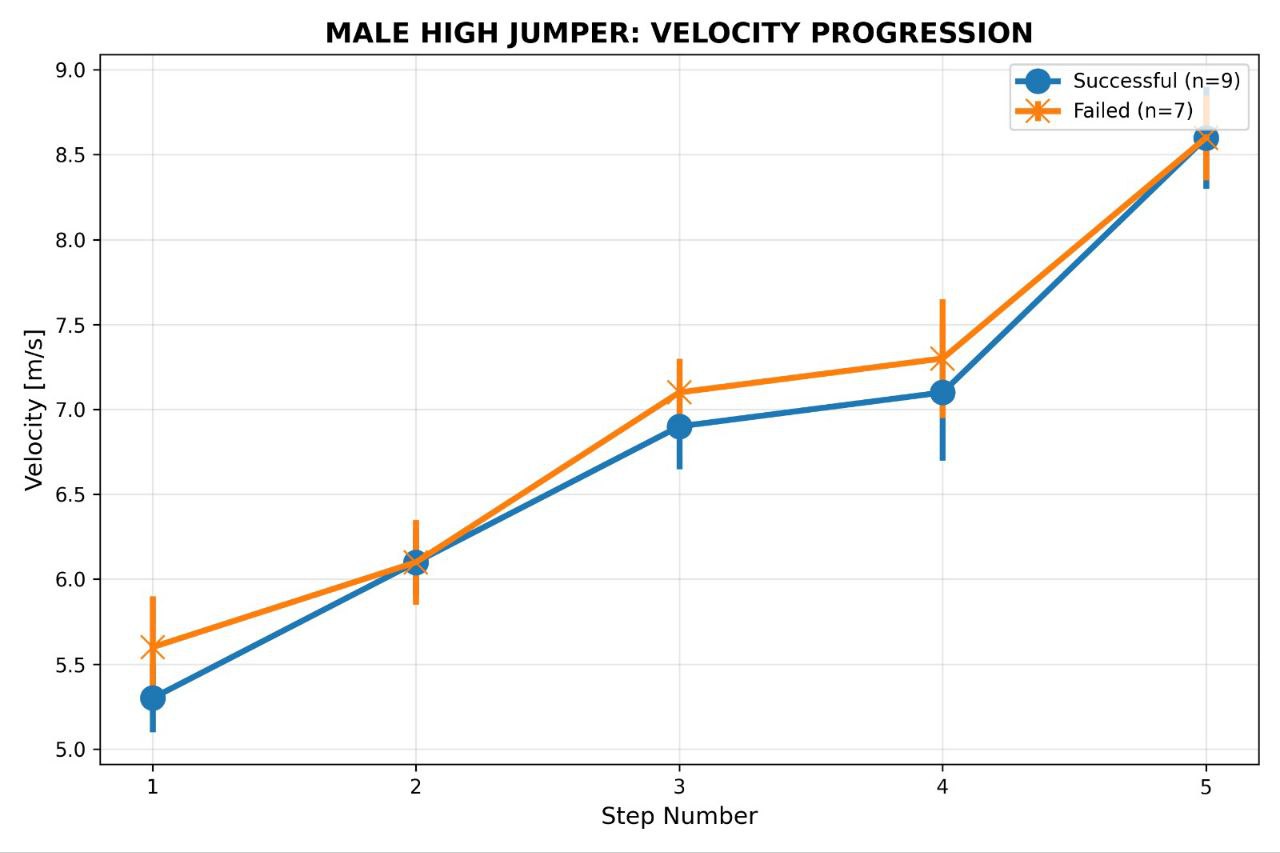
Another critical element is not how fast the athlete runs, but how speed is built throughout the run-up.
When comparing successful and failed jumps, a clear pattern frequently emerges:
-
successful jumps tend to show a smoother and more progressive increase in velocity
-
failed attempts may reach similar or even higher peak speeds, but with poorer control in the final steps
This highlights a fundamental concept in high jump performance:
Maximum speed alone does not predict success. What matters is how speed is distributed and managed.
Late or uneven acceleration often compromises posture, timing, and take-off mechanics. Speed must arrive at take-off in a usable form; otherwise, it becomes a limiting factor rather than a performance enhancer.
3. Run-Up Trajectory and Curve Management
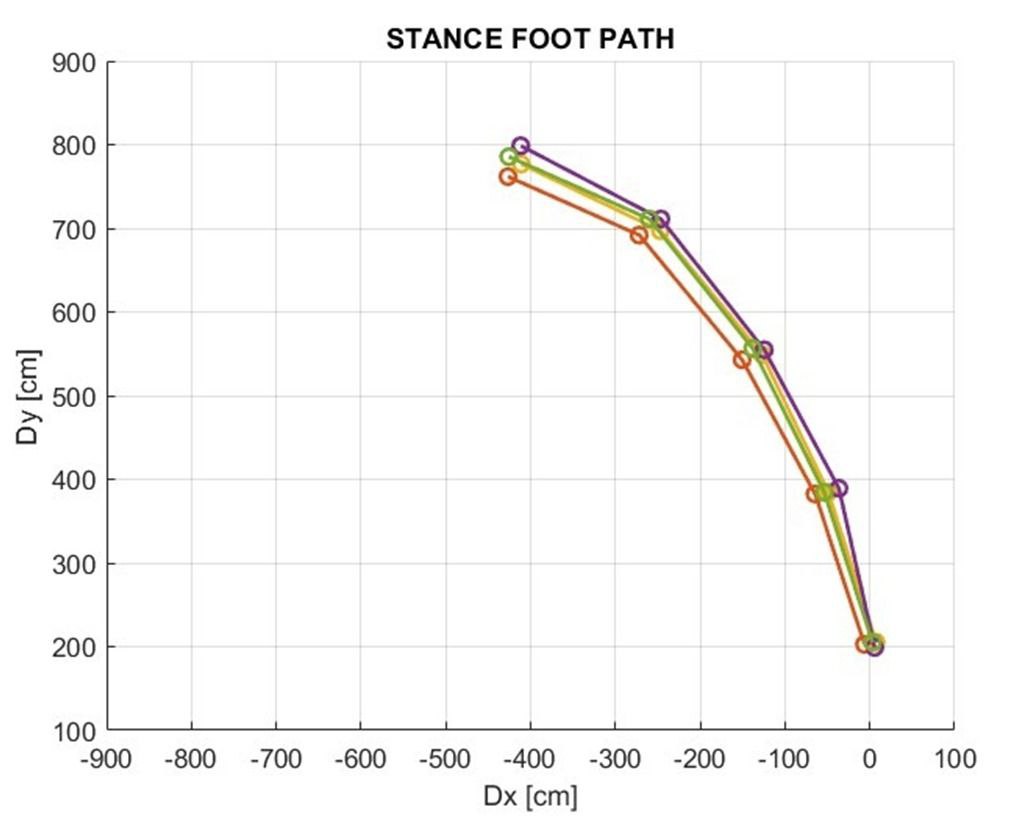
The third key data point is the trajectory of the run-up in the curve, typically analysed through the path of the stance foot.
Trajectory analysis allows coaches to evaluate aspects of performance that are difficult to detect with the naked eye, such as:
-
consistency in following the intended curve
-
the athlete’s ability to manage centrifugal forces
-
alignment between the approach path and take-off direction
Two athletes may reach the same take-off point, but the way they arrive there can be technically very different.
Irregular trajectories often indicate instability, excessive lateral displacement, or technical compensations under speed. These issues negatively affect repeatability and increase the likelihood of performance variability under competition pressure.
Connecting the Dots: From Data to Coaching Decisions
Taken individually, each of these data points provides useful information. However, their true value emerges when they are analysed together.
By combining:
-
flight time in the last steps
-
velocity progression
-
run-up trajectory
coaches can build a coherent technical picture of the jump.
The goal is not to collect more data, but to use data to simplify coaching decisions, improve consistency, and guide technical development with greater precision.
When integrated with video analysis and on-field observation, these measurements help distinguish between speed problems, rhythm problems, and control problems—allowing for more targeted and effective interventions.
A Practical, Coach-Oriented Approach
At elite level, data must serve performance, not complicate it.
Used correctly, these three parameters help coaches understand why a jump works or fails, long before the outcome becomes obvious. They shift the focus from isolated moments to the overall quality of the approach, where high jump performance truly begins.
This article is based on the technical framework presented in the Speed Lab webinar series, where real athlete data, video analysis, and applied coaching examples are used to connect measurement with performance.
Want to go deeper?
If you’d like to explore these concepts in more detail and see how they are applied in real coaching practice, you can join this webinar:
Speed Lab – Using Data to Improve High Jump Technique
📅 22 January – 12:30 PM CET
🎙 Silvano Chesani