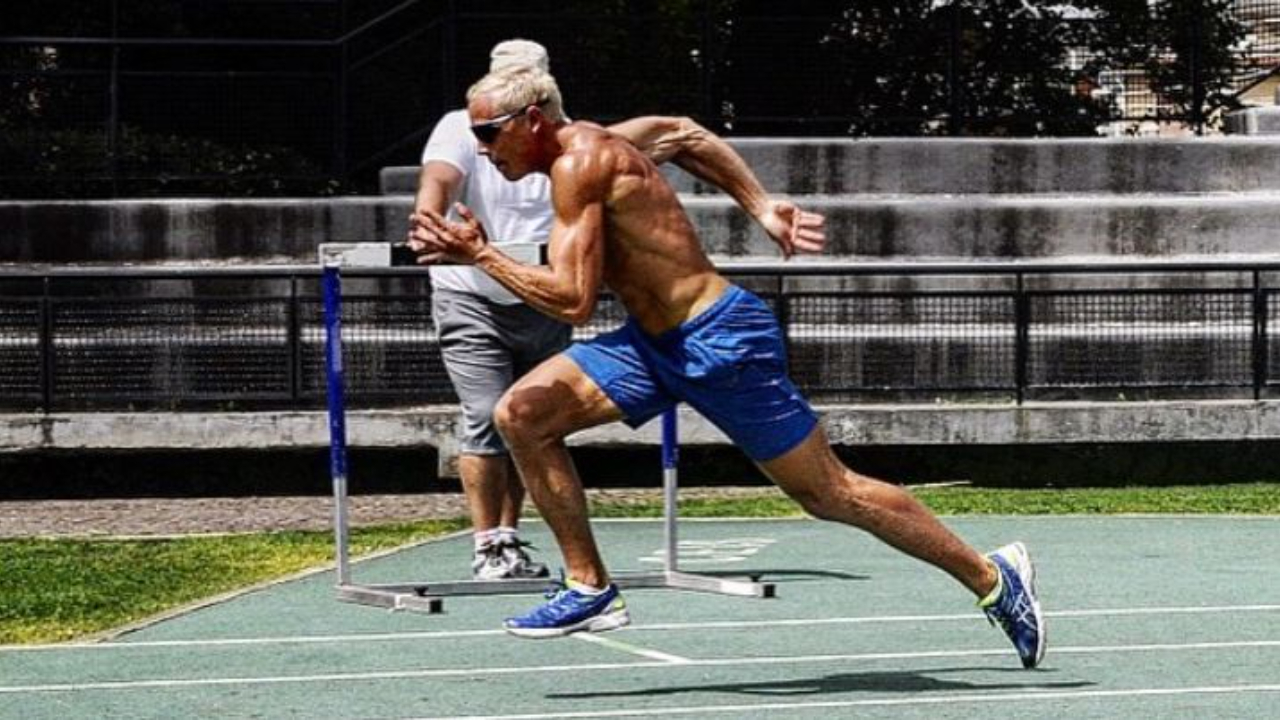
Sprint acceleration accounts for more than half of 100m sprint race performance.
And yet, in everyday coaching practice, it is still often treated as a preparatory phase — something to “get through” before real sprinting begins.
Strength improves. Gym numbers go up. Exercises look solid.
But when athletes return to the track, the first steps often look frustratingly similar. Acceleration remains slow, ground contact times stay long, and performance stagnates.
This disconnect is not a matter of motivation or effort.
It is a model problem.
A common mistake in sprint training is treating acceleration, maximal velocity and technique as separate qualities. In reality, sprinting is a continuous mechanical process.
Acceleration is simply the first expression of the same system that will later determine upright sprint speed. What happens in the first few steps directly s...
Have you ever had this happen?
You work really well with an athlete in the gym.
Strength improves, loads go up, exercises look solid.
Numbers are better, the athlete feels stronger.
Then you go back to the track…
and in the first few steps, almost nothing changes.
Acceleration is still slow, ground contact times remain high, and sooner or later some hamstring tightness starts to appear.
And the obvious thought comes up:
How is this possible? They are clearly stronger.
This scenario is far more common than we like to admit.
And it’s usually at this point that a very natural reflex kicks in:
Maybe they’re still not strong enough.
So we add more load.
More glute work.
More strength.
But what if this is the wrong question?
In early acceleration (especially in the first 5–10 meters), performance is rarely limited by force production alone.
Much more often, what actually limits the athlete is:
We’re proud to announce that our first confirmed speaker for Speed Festival 2025 is none other than Dr. Jo Brown — a globally respected performance physiotherapist, biomechanist, and movement specialist with over two decades of experience at the highest level of elite sport.
 Jo’s track record spans 18 different sports and includes work with Olympic medallists, NBA stars, world champions, international footballers — and critically, top-tier Jamaican sprinters and hurdlers. Most notably, she works closely with Megan Tapper, Jamaica’s world-class 100 m hurdler. Tapper — Olympic medallist and national champion — has credited Jo’s integrated performance care for deepening her biomechanical awareness and accelerating recovery from minor injuries
She’s also played a pivotal role in the rise of Noah Lyles, the fastest man on the planet and Olympic gold medallist at Paris 2024, applying her integrated performance care model to support his preparation, resilience, and execution on the world s...
Vuoi essere informato sulla nuova edizione dello SprintFestival? Lascia i tuoi dati e le tue preferenze nel form sottostante.
50% Completato
"Inserendo ed inviandoci il tuo nome e la tua email dichiari di aver letto e di accettare le nostre condizioni sulla privacy policy e acconsenti al trattamento dei miei dati personali ai sensi dell’art. 13 D. Lgs. 30 giugno 2003, n. 196"