
Where Science Meets Coaching Experience by Håkan Andersson
Speed Festival 2026 — Recap
Where science meets
coaching experience
|
Håkan Andersson
Moderator, Speed Festival 2026 · 40+ years coaching · Sweden
|
Returning to Italy for Speed Festival 2026, this time as moderator, was both a pleasure and an opportunity to reflect on how our understanding of sprint performance continues to evolve. The best conferences do more than present new information: they challenge assumptions, stimulate discussion and make us reconsider what we think we know.
The Value of a Growing International Meeting Place
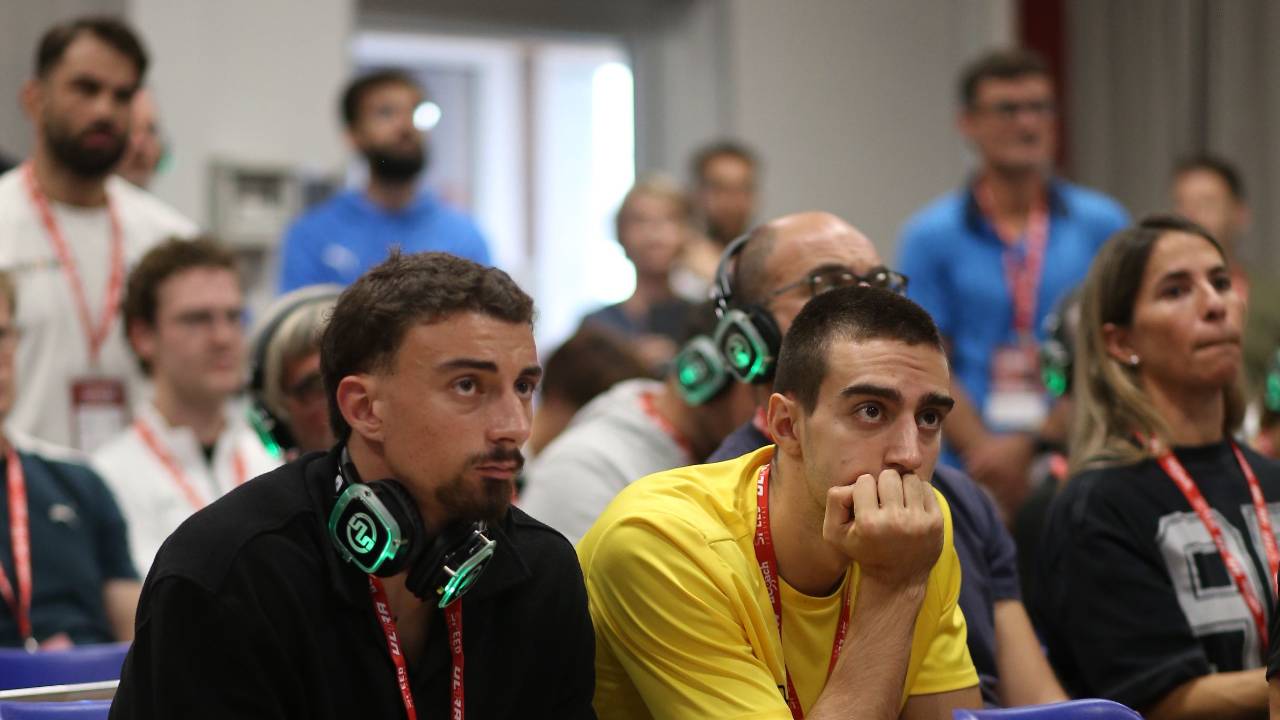
Speed Festival continues to grow. This year, participants from 20+ countries included experienced coaches, therapists, researchers and other professionals working at high levels of sport. That international mix is one of the event's greatest strengths. The knowledge in the audience is often as valuable as the expertise on stage.
The organisation deserves considerable credit for creating such a welcoming environment. Just as importantly, the international gathering created valuable opportunities to exchange ideas with colleagues and speakers beyond the formal presentations.
Different Perspectives, One Central Question
The programme brought together apparently different approaches to performance. What interested me most was not simply what each speaker presented, but how their perspectives complemented or challenged one another.
A question ran through many of the sessions: are we identifying what limits an athlete, or merely describing how that athlete performs? The distinction matters because a useful measurement is not automatically an explanation, and an explanation is not yet a training intervention.
Asking the Questions That Matter
As moderator, I wanted to explore the gap between an interesting finding and a useful coaching decision. My prepared questions were deliberately practical: what change in free sprinting would demonstrate transfer from resisted work? And if a controlled movement assessment conflicts with what we see during maximal sprinting, which should carry more weight?
The same challenge applied to thigh angular velocity, plyometric testing and athlete monitoring. Is a particular measurement a cause of better performance, a consequence of an effective strategy, or simply a useful marker? When a jump score improves but sprinting does not, what have we really achieved?
|
A successful conference should leave us not only with new information, but also with better questions. |
These were questions I brought to the discussions, not conclusions I claim the speakers shared. They reflect a principle that has guided much of my coaching: measurements matter most when they help us make better decisions for the individual athlete.
Force, Coordination and the Limits of Profiling
Marco Airale offered a systematic and practical account of resisted sprint training, including load prescription through velocity decrement and load–velocity profiling. Johan Lahti, by contrast, focused primarily on change of direction (COD) and multidirectional speed. His presentation explored how the muscular demands of movement depend on the direction and nature of the task, rather than assuming that linear sprint capacity transfers unchanged to every form of speed. Taken together, their presentations highlighted the gap between measuring mechanical output and understanding how that output is produced.
A load–velocity profile can describe an athlete's performance characteristics. But two athletes with similar profiles may be limited by different combinations of strength, coordination, force orientation or the ability to express force during ground contact. I therefore remain cautious about treating such a profile as a blueprint for training.
Velocity decrement is a useful way to express the effect of resistance, particularly when comparing athletes or devices. Yet if a coach already knows the relationship between a given load and an individual athlete's running velocity, expressing it as a percentage decrement does not necessarily add much to the practical decision. More important is what the resistance does to the movement itself.
As loads become heavier and velocity falls, contact times, positions and coordination change. Heavy resisted sprinting may be valuable for developing strength, but we should be clear about when the task moves away from the demands of free sprinting. The decisive question is whether the intervention improves unresisted performance.
Lahti's distinction between physical "hardware" and coordinative "software" was particularly useful in the context of COD. Changing direction requires more than the ability to produce high forces: the athlete must manage braking, reposition the body and redirect force effectively toward the new direction of travel. The relative contribution of different muscles and movement strategies changes with the task. His multidirectional speed compass offered a way to think about those demands, while also reminding us that a model cannot by itself determine what an individual athlete needs to train. Should we develop greater physical capacity in the gym, or improve the movement solution on the field? Two athletes may complete the same COD task successfully using different strategies, and those differences are not automatically deficiencies. For me, this reinforced a broader principle relevant to sprinting as well: strength matters, but its expression depends on coordination, timing and task-specific demands.
What We Measure — and What We Understand
Hannes Huyck introduced thigh angular velocity as an additional way to examine sprint mechanics. It is an interesting variable, particularly when considered alongside step-by-step measures of velocity, step length, frequency and contact time. But is high thigh angular velocity itself a limiting factor — I personally think so, but it can also partly be the consequence of an effective overall sprinting strategy. Increasing one measured variable does not necessarily make an athlete faster.
This question connected particularly well with Dr Jo Brown's two contributions. In Saturday's workshop, she explored the foot–pelvis connection through her Four P's — Posture, Position, Pressure and Process — using assessment to examine how athletes organise and transfer force. Her Sunday lecture, The Speed Equation, developed this into a broader model of Pressure, Position and Processing, emphasising that possessing physical capacity is not the same as expressing it at sprinting speed. The foot is not simply a spring but also a source of sensory information, while stiffness and movement organisation must be appropriately timed under very short ground-contact constraints.
Stefano Serranò's presentation on postural conditioning shared considerable common ground with Jo Brown's approach. Both emphasised the importance of understanding how posture, movement organisation and individual physical characteristics influence function, rather than evaluating isolated muscles or positions.
While Brown explored the relationship between the foot, pelvis and the processing of sensory information, Serranò approached posture as a functional component of movement rather than an aesthetic ideal. Both perspectives raised an important question for me: how reliably can we identify genuine performance limitations through clinical assessments or movement screening?
There is a risk that we sometimes overinterpret what we observe during static assessments or relatively slow, controlled movements. The demands of maximal sprinting — with its high forces, rapid coordination and extremely short ground-contact times — are fundamentally different. An apparent asymmetry or movement dysfunction may be clinically relevant without necessarily limiting sprint performance.
This does not diminish the potential value of assessment. Rather, it highlights the importance of establishing whether an identified characteristic actually affects performance and whether an intervention produces a meaningful improvement. We should also recognise that athletes may develop individual movement solutions that look unconventional but work extremely well.
|
Are we identifying a genuine limitation, or are we sometimes attempting to correct a successful individual strategy? |
Laura Turner's treatment of hurdling, rhythm and adaptability brought this idea into a practical sporting context. Hurdles impose fixed external constraints, yet athletes still find individual ways to negotiate them. Coaches need to understand the mechanical demands of the event while leaving room for athletes to discover effective solutions. Variability has value when it develops adaptability to the task — not simply because variation is fashionable. I really liked Laura's idea that sometimes we need to create chaos to help athletes develop and perform. It's an interesting reminder that learning doesn't always follow a straight line.
The Transfer Problem
Gennaro Boccia's presentation on plyometrics examined the neuromuscular mechanisms behind explosive performance and the limitations of familiar measures such as the Reactive Strength Index. His contribution connected naturally with the discussions of resisted sprinting and muscle function. A better jump score, more strength or improved performance against resistance may all be useful adaptations. None, on its own, guarantees faster sprinting.
For me, this is the central issue of training transfer. Physical capacities must be developed, but athletes also need regular exposure to the specific timing and coordination demands of sprinting. Horizontal and vertical plyometric tasks may serve different purposes during acceleration and upright running, but their value ultimately depends on the athlete and the effect on performance.
Amit Batra's presentation on science-informed coaching helped put these discussions into perspective. I find it useful to distinguish three questions: What is happening? Why is it happening? What should we change? Modern technology is increasingly good at answering the first. The second is harder, and the third is where coaching judgement becomes indispensable.
|
Precision should not be mistaken for understanding. |
Having used measurement systems for many years, I strongly value objective data. A detailed graph can describe performance without revealing its cause. The best technology helps us test assumptions and evaluate interventions; it does not make decisions for us.
The Individual Behind the Numbers
Anna Ryzhykova provided a welcome reminder that athletes are people, not collections of mechanical variables. Trust, communication, confidence and emotional security influence how athletes train and compete. Two athletes with similar physical capacities may respond very differently to the same programme or coaching approach.
Individualisation appeared throughout the festival, but it meant different things to different speakers. For Airale, it involved adjusting resistance to the athlete. For Brown and Serranò, it involved understanding movement organisation. For Turner, it included rhythm and adaptability. For Ryzhykova, it extended to the human relationship at the centre of coaching.
These are not competing definitions. They are parts of the same task. Genuine individualisation requires us to understand physical capacity, coordination, training history and personality together. In my experience, that is far more demanding and more important than choosing a load from a profile.
What I Take Home from Speed Festival
I remain convinced that sprinting is fundamentally a coordination challenge shaped by strength, power, elasticity, anatomy and individual experience. We should welcome scientific advances while remaining critical about what they actually demonstrate. The question is not only whether we can measure something, but whether understanding it helps an athlete run faster.
For me, Speed Festival 2026 was not valuable because it provided definitive answers to every question. It was valuable because it challenged established ideas, encouraged reflection and reminded us how much there is still to learn about human performance.
My thanks to the entire Speed Festival team for their hospitality and commitment to an event that improves year by year. It is always a pleasure to return to Italy, for their love of the sport certainly, but also for the people, culture and warmth of the welcome. I look forward to seeing how the festival develops next.
|
Håkan Andersson
Coach of more than four decades, moderating Speed Festival 2026 in Dalmine, Italy. This recap reflects his own questions from the floor, not conclusions claimed by the speakers themselves.
|
|
|